



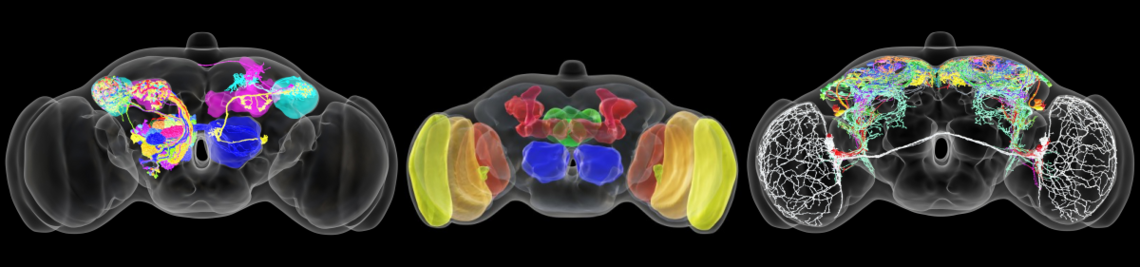
Professorship Wegener
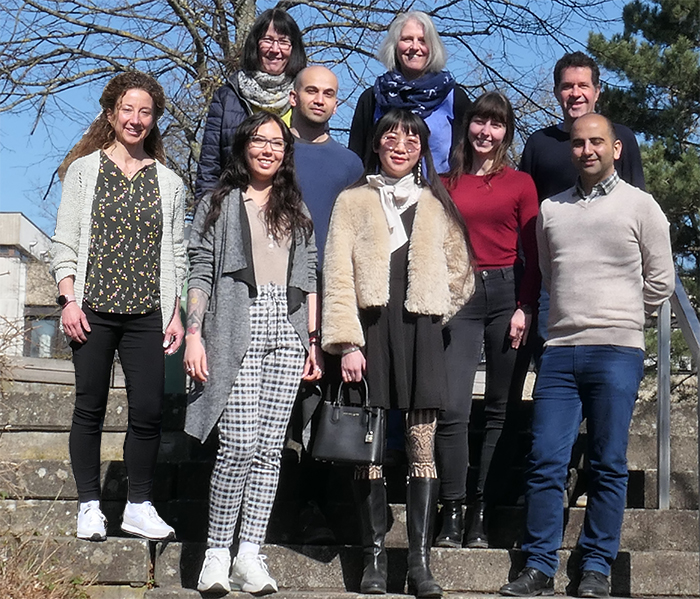
Our research group investigates the role of neuroendocrine peptides in the circadian control of behaviour, metabolism and development, and their importance for insect adaptation to a daily changing environment.
Neuropeptides are the most diverse group of neural messengers. They act as neuromodulators or neuroendocrine hormones. Non-neural endocrine cells in the gut and other tissues can also release neuropeptides hormonally. The circadian system in particular relies on peptidergic signalling to coordinate behaviour, physiology and development throughout the body.
Using peptidomic techniques, our group has contributed to the chemical characterisation of neuroendocrine and brain-gut peptides in insects and their post-transcriptional processing.
Our current research focuses on the mechanisms underlying the circadian regulation of insect development and eclosion, as well as the role of neuropeptide hormones in communication between central and peripheral clocks in the control of food intake and energy metabolism. The ultimate goal is to gain a systemic understanding of the circadian regulation of the neuroendocrine system and its functions in an insect.
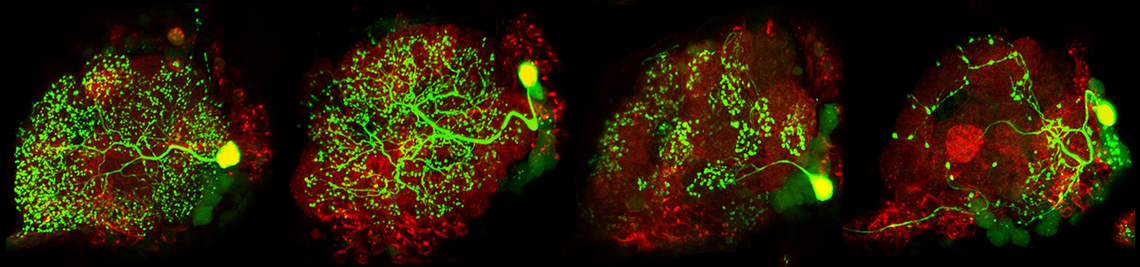
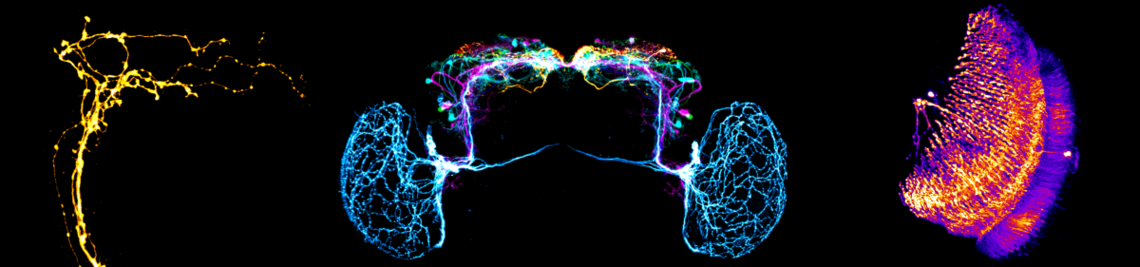
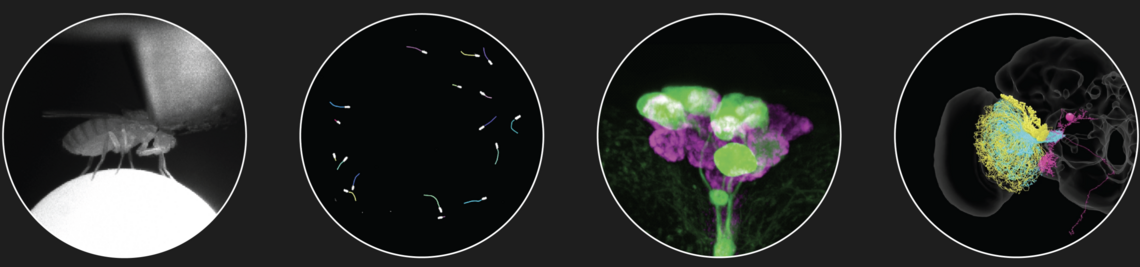
Our main model is the fruit fly Drosophila, which allows us to use powerful genetic tools, connectomics, imaging and automated behavioural analyses.
![[Translate to Englisch:] Logo DrosEU](/fileadmin/07030100/Logos/DrosoEU_HP1.jpg)