


WG Senthilan
Research Focus
Light is one of the most important environmental factors. It enables vision, controls circadian rhythms, influences behavior, and shapes many biological processes. Animals use various photoreceptors, each of which is specialized for specific wavelengths. In particular, rhodopsins and cryptochromes play a central role by converting light into complex signals that control visual and non-visual responses.
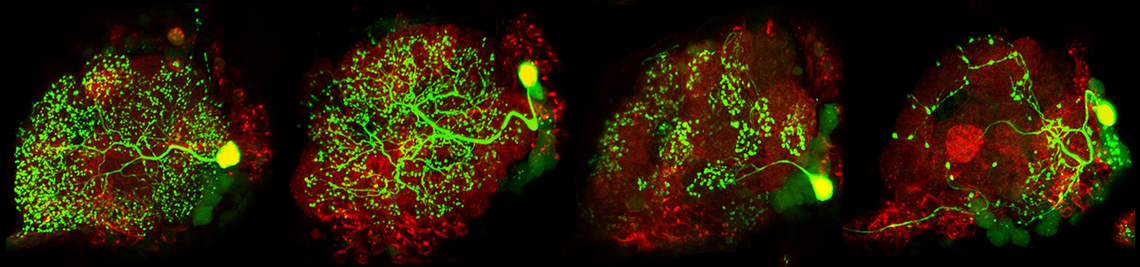
Our research group studies these systems in Drosophila melanogaster, analyzing their sensitivity, signaling pathways, and functions. We examine both classic image-forming and non-imaging tasks of photoreceptors, such as regulating the circadian clock and other light-dependent behaviors. We also investigate how factors such as temperature, age, and sex influence these responses. Additionally, we focus on the evolution of rhodopsin and cryptochrome systems in other Drosophila species to understand how they have adapted to different environmental conditions.
To gain a comprehensive picture of light-dependent systems, we combine methods from molecular biology, genetics, histology, neurobiology, and behavioral analysis to bioinformatics.