


Dr. Priscila Hanisch
Dr. Priscila Hanisch
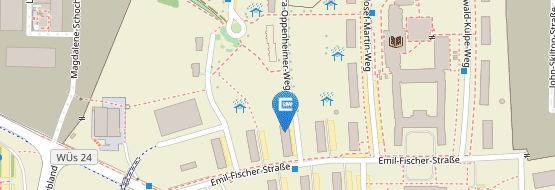
Campus Nord, University of Würzburg
Emil-Fischer-Straße 32

My primary interest are social insects, encompassing a wide range of topics including diversity, ecology, behavior, and evolution. Specifically, I am curious about foraging behavior, social organization, chemical communication, and the ecological implications of predator-prey interactions.
My main study organism are neotropical and predatory ants. At present, my attention is directed towards the species Dinoponera grandis (formerly known as D. australis), which serves as a good model for investigating wound care behavior in small, predatory, queen-less ant societies.
2023–onwards
Postdoc, Department of Animal Ecology and Tropical Biology, University of Würzburg, Germany
2021–2022
Postdoc, Newton Fund Latin America Biodiversity, Facultad de Agronomía, Buenos Aires University. Argentina.
2018–2021
Postdoc, Museo Argentino de Ciencias Naturales “Bernardino Rivadavia”, Buenos Aires, Argentina.
2013–2018
PhD-Graduate, Department of Animal Behavior and Diversity, University of Buenos Aires, Argentina.
2013
Lic. in Biological Sciences, University of Buenos Aires, Argentina.
2024
Seymour M, Roslin T, deWaard JR,... Hanisch PE, ..., Hebert P (2024). Global arthropod beta-diversity is spatially and temporally structured by latitude. Communications Biology 7: 552. (link)
2023
Hanisch PE, ER Hanisch, V Blanco, PL Tubaro, & AV Suarez (2023). Spatial fidelity and uniform exploration found in the foraging behavior of a giant predatory ant. Animal Behaviour. (link)
KI Drager, MD Rivera, JC Gibson, SA Ruzi, PE Hanisch, R Achury & AV Suarez (2023). Testing the predictive value of functional traits in diverse ant communities. Ecology and Evolution. (link)
2022
B Bukowski, S Ratnasingham, PE Hanisch, PDN Hebert, K Perez, J deWaard, PL Tubaro & DA Lijtmaer (2022). Flying insects in the southern Atlantic Forest: striking diversity and patterns of seasonal abundance variation. PLOS ONE (link)
Hanisch PE, J Sosa-Calvo, & T Shultz (2022). The last piece of the puzzle? Phylogenetic position and natural history of the monotypic fungus-farming ant genus Paramycetophylax (Formicidae: Attini). Insect Systematics and Diversity. (link)
2021
RR Silva, F Martello, R Feitosa, O Silva, L Prado, CF Brandão, E Zoppas de Albuquerque, M Morini, J Delabie, ECS Monteiro, PE Hanisch et al. (2021) ATLANTIC ANTS: a dataset of ants in Atlantic Forests of South America. Ecology (link)
2020
Hanisch PE, K Drager, WH Yang, PL Tubaro & AV Suarez. (2020) Intra- and interspecific variation in trophic ecology of ‘predatory’ ants in the subfamily Ponerinae. Ecological Entomology (link)
2018
PE Hanisch, AV Suarez, PL Tubaro & CI Paris (2018). Co-occurrence patterns in a subtropical ant community revealed by complementary sampling methodologies. Environmental Entomology. (link)
2017
PE Hanisch, PD Lavinia, AV Suarez, DA Lijtmaer, M Leponce, CI Paris & PL Tubaro (2017). Mind the gap! Integrating taxonomic approaches to assess ant diversity at the southern extreme of the Atlantic Forest. Ecology and Evolution. (link)
2015
C Telfer, MR Young, J Quinn, K Perez, CN Sobel, JE Sones, V Levesque-Beaudin, PE Hanisch et al. (2015). Biodiversity inventories in high gear: DNA barcoding facilitates a rapid biotic survey of a temperate nature reserve. Biodiversity Data Journal. (link)
2014
Hanisch PE, L Calcaterra, M Leponce, R Achury, AV Suarez, R Silva, CI Paris (2015). Check list of ground-dwelling ant diversity (Hymenoptera: Formicidae) of the Iguazu National Park with a comparison at regional scale. Sociobiology. (link)
CV Tillberg, B Edmonds, A Freauff, PE Hanisch, CI Paris, CR Smith, ND Tsutsui, BD Wills, SE Wittman & AV Suarez (2014). Foraging Ecology of the tropical giant ant Dinoponera australis (Hymenoptera: Formicidae) –Evaluating mechanisms for high abundance. Biotropica. (link)