Our group has its
research focus on fundamentals of honeybee biology and specifically onto
principles of disease resistance in honeybees.
Honeybees are
ecologically and economically most relevant insects. In order to understand how
honeybees prevent and fight diseases we use a wide scope of technologies. We
have introduced a new technology (RFID=Radio frequency identification) into the
behavioural biology of insects, which now allows a life long-recoding of
behavioural data for individual bees This technology will allow in future to
link a complete data set on identified honeybee individuals with biochemical
and genetics details on the same animals aiming at an understanding how the bee-controlled
environmental conditions inside the nest may be used by the bees to fight
diseases. We use methods from animal physiology and behavioural biology and to
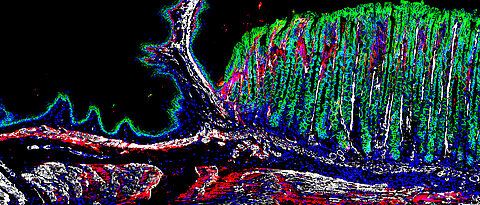
study physical and cognitive abilities in healthy and infected bees. Histological
and biochemical methods help to survey the hemolymph (“blood”) of healthy and
infected individuals. PC modelling of colony efficiency is an important tool
for the integration of detailed experimental results.
Selected
awards:
1973 - 1974
Stipend awarded by the Studienstiftung des Deutschen Volkes
1974 - 1977 PhD-stipend
awarded by the Studienstiftung des Deutschen Volkes
1978 Byk-award of
Herbert Quandt-foundation for an outstanding dissertation
DFG 1988 Heisenberg
fellowship
2005 By EMBO
among the best in Europe to communicate science
For detailed
information about Prof. Dr. Tautz's publications please go here
http://www.bienenforschung.biozentrum.uni-wuerzburg.de/wir_ueber_uns/mitglieder/