

MultiCrossBEF
Land-use impacts on above-belowground arthropod food webs, energy flux, and multitrophic ecosystem functioning
Project overview
Global change is transforming ecological communities with far-reaching consequences for the functions and services provided by ecosystems, and land-use is one of the most important drivers of this change. Although its overall impact on grassland communities is well studied, two key aspects remain poorly understood.
Firstly, little is known about how land-use intensity influences the interactions and interdependencies between above- and below-ground compartments. This is problematic because both compartments make different contributions to the functioning of terrestrial ecosystems and influence each other.
Secondly, we know little about how land-use intensity affects ecological interactions and the resulting trophic networks. It is precisely these interactions that control the flow of matter and energy through ecosystems and thus form the basis of central ecosystem processes.
The MultiCrossBEF project utilises the large-scale observational land use gradient of the temperate grasslands of the Biodiversity Exploratories to close these knowledge gaps. The aim is to understand how above- and belowground dependencies and ecological interactions change with increasing land-use intensity and how these changes mechanistically affect key ecosystem processes.
Aims
The aim of the project is to study above- and belowground invertebrate communities simultaneously in all grassland sites of the Biodiversity Exploratories in order to comprehensively assess the effects of land-use intensity on the structure and function of above- and belowground food webs and communities.
MultiCrossBEF mechanistically analyses the relationships between land use, above- and belowground biodiversity and ecosystem multifunctionality. The focus is on trophic interactions, energy flows and energy channels along the land-use gradient.
Methods
The project combines field work, taxonomic surveys and trophic analyses to reconstruct and functionally evaluate above- and belowground food webs in German grassland ecosystems.
Among other things, the following are used
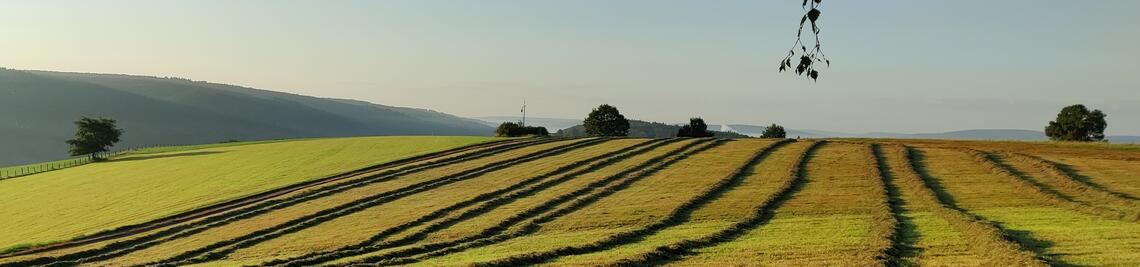
- Sampling of above- and belowground invertebrate communities in all 150 grassland plots of the Biodiversity Exploratories
(suction trapping, soil core sampling, mustard extraction of earthworms) - Heat extraction and sorting of fauna samples
- Determination of organisms and measurement of body lengths
- Stable isotope analyses and compound-specific isotope analysis of amino acids
- Potential additional gut content metabarcoding analyses for selected consumer species
- Construction of above-ground food webs and calculation of energy flows, energy channels and ecosystem multifunctionality
Relevance
The project contributes to a better understanding of how land use changes the coupling between above- and belowground systems and what consequences this has for biodiversity and ecosystem function. This mechanistic understanding is crucial to assess current impacts of land use and to better mitigate future pressures on grassland ecosystems.
Project information
| PI: | Prof. Dr Malte Jochum |
| Subject: | Land use, Above-belowground |
| Study site: | 3 regions across Germany: Schorfheide-Chorin, Hainich-Dün, Swabian Alb |
| Funding: | NA |
| Duration: | 2024-2027 |
| Collaborators: | Dr Melanie Pollierer, Prof. Dr Nico Eisenhauer, Stefan Scheu, Klaus Birkhofer |
| Staff: | Ayuhsi (PhD candidate), Rasmus Dam Jensen (PhD candidate), multiple student helpers |
| Links: | Project Description at Biodiversity Exploratories Website |