
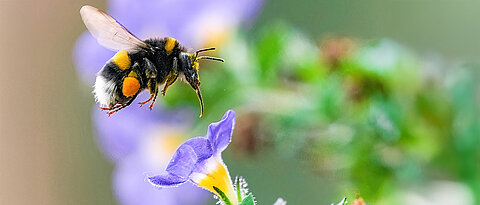
Glossy flowers are visible to bees from a distance, but make color recognition difficult up close. They thus represent a visual compromise of nature, as a new study by the University of Würzburg shows.
more

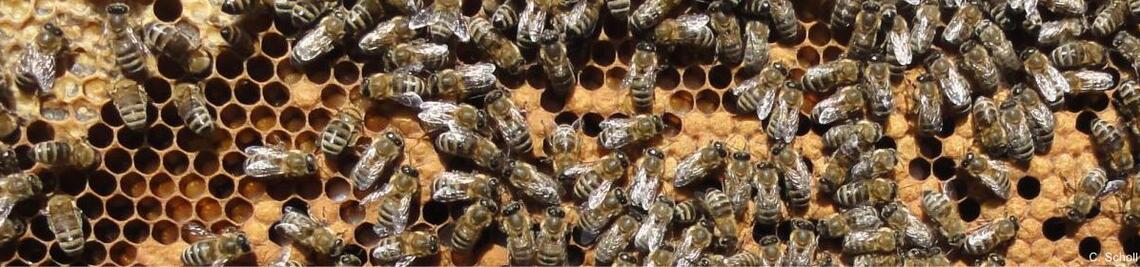
Glossy flowers are visible to bees from a distance, but make color recognition difficult up close. They thus represent a visual compromise of nature, as a new study by the University of Würzburg shows.
more
Two researchers from the Würzburg Biocentre have been awarded prestigious grants for their projects: The European Research Council's Starting Grants are worth €1.5 million each.
more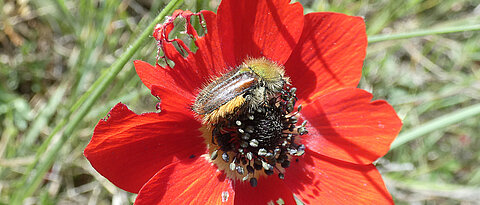
Hardly any insects can see the colour red. However, two beetle species from the Mediterranean region are an exception, as an international research team has discovered.
more
Many animals orient themselves using their sense of magnetism. However, this can be based on different physical mechanisms. A research team from Oldenburg and Würzburg has now investigated the navigation of the desert ant.
more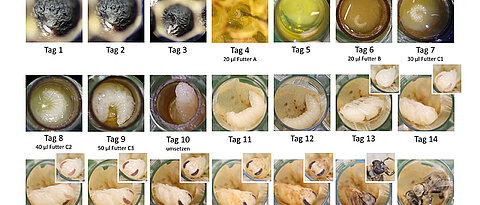
Dangerous mixtures: pesticides in combination can have unexpected effects on the development of honeybees. This is shown by a new study from the Biocenter.
more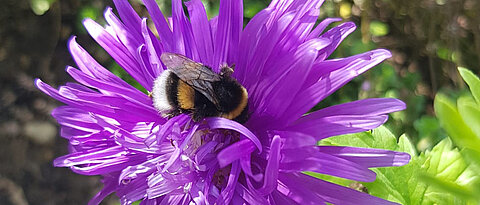
In their natural environment, wild bees are exposed to various pesticides that can have a potentially toxic effect. A study by the University of Würzburg has now shown that bumblebees are relatively resistant to these products.
more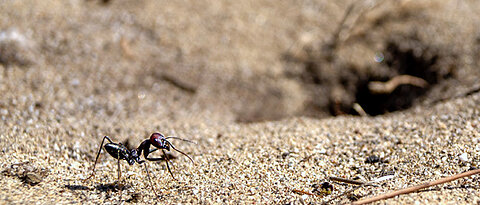
Desert ants find their way during an early learning phase with the help of the Earth's magnetic field. The associated learning process leaves clear traces in their nervous system. This is shown in a new study by a Würzburg research team.
more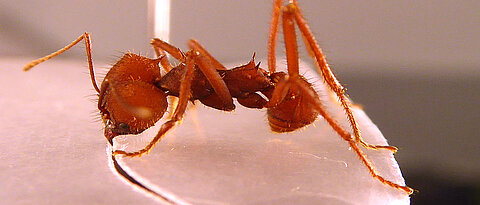
How do leafcutter ants measure the size of the leaf pieces they cut off? A study by the University of Würzburg now provides answers.
more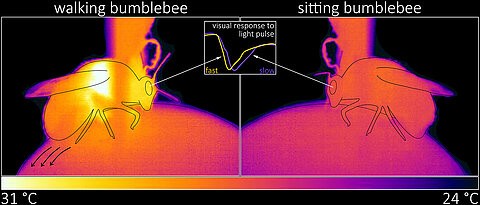
When bumblebees move, their vision improves. Scientists at the University of Würzburg have now been able to prove this.
more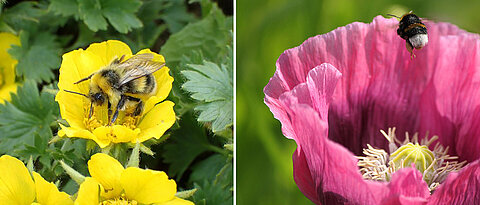
The search for nectar costs insects a lot of energy, so they have to be as efficient as possible. Colourful patterns on the petals can help with that.
more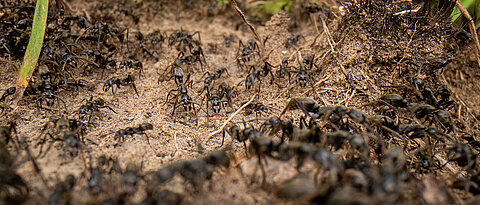
Have you ever asked yourself this question? A team led by Würzburg biologists Dr. Patrick Schultheiss and Dr. Sabine Nooten now has the answer. In addition to the number, the distribution was also determined.
more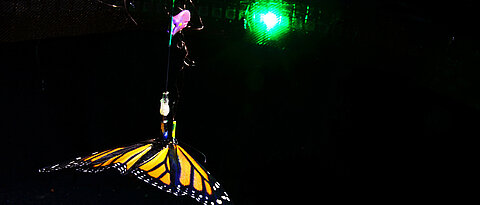
Monarch butterflies employ a sun compass on their long-distance migration. Surprisingly, a new study shows that the compass is only established during flight.
more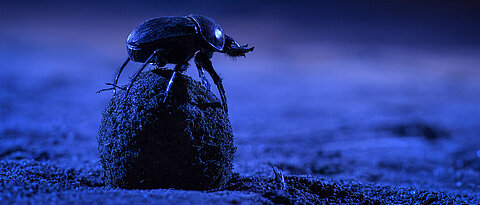
Light pollution makes it difficult for dung beetles to find their way. This is probably also true for other nocturnal insects and birds, as researchers suspect.
more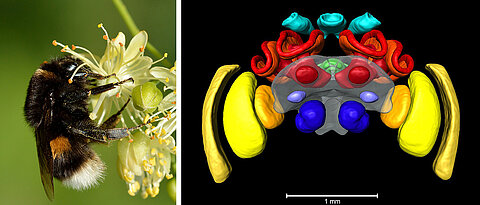
A three-dimensional atlas of the bumblebee brain is now available. It will allow to even better research how nerve cells are interconnected and how they process information.
more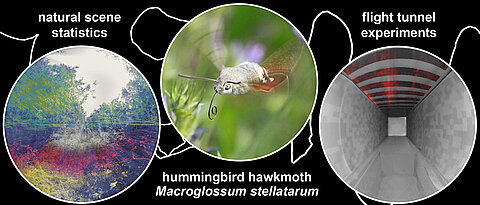
How do hawkmoths use visual patterns in different parts of their visual field? While researching this question, a team from the Würzburg Biocentre experienced a surprise.
more