


Gönülkirmaz-Cancalar, Özlem
Dr. Özlem Gönülkirmaz-Cancalar
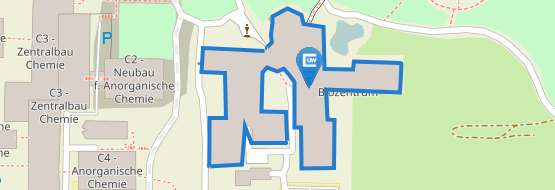
Biozentrum
Am Hubland
![[Translate to Englisch:]](/fileadmin/_processed_/1/1/csm_Goenuelkirmaz-Cancalar_Oezlem_28822d8210.jpg "[Translate to Englisch:]")
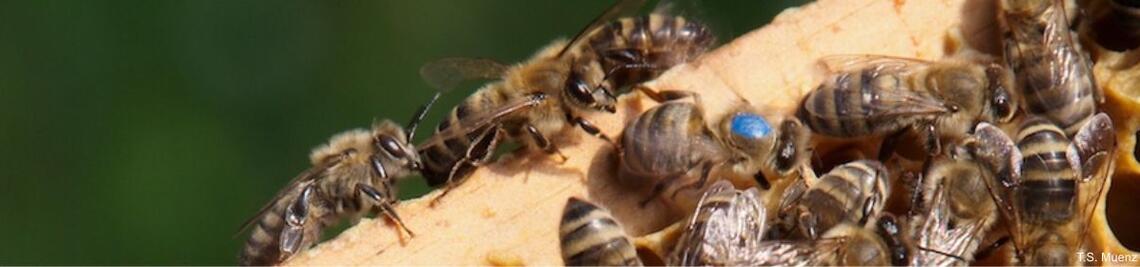
Circadian clocks are endogenous systems regulating many physiological and behavioral responses with a cycle of about 24 hours. Social bees, including honey bees and bumble bees, are excellent models for circadian biology because their ecological success depends on a remarkable repertoire of time-dependent activities. They use sun-compass orientation, anticipate the timing of floral rewards, and synchronize their behaviors socially. They show adaptive plasticity in their rhythmic behaviors depending on colony tasks. This intricate relationship between circadian rhythms and behavioral ecology makes bees uniquely suited to study the role of clock genes in complex behaviors.
I aim to understand the underlying molecular mechanisms of clock-controlled behaviors in social bees. I investigate the role of social complexity in time memory by developing comparative assays for honey bees and bumble bees and establishing Bombus terrestris as a genetic model for circadian studies in comparison with Apis mellifera.