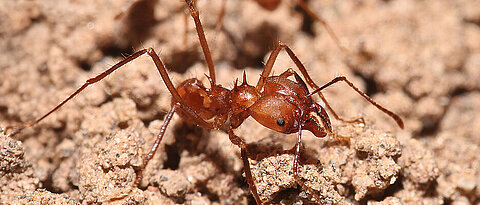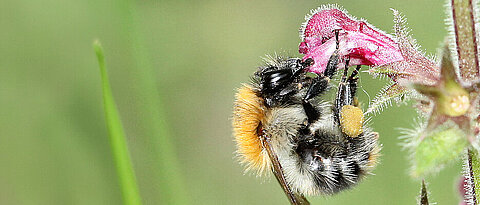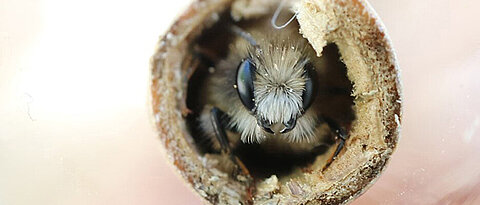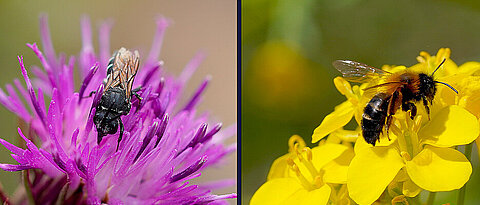

A large-scale experiment shows that warmth brings bees and wasps out of hibernation earlier – leaving some of them with poorer starting conditions. This is particularly true for species in cooler regions that emerge during spring.
more
A large-scale experiment shows that warmth brings bees and wasps out of hibernation earlier – leaving some of them with poorer starting conditions. This is particularly true for species in cooler regions that emerge during spring.
more
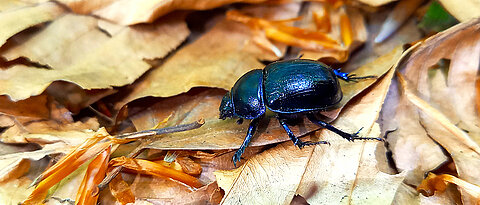
Rising temperatures are threatening dung beetle populations in the Amazon. The example shows a trend that could bring many insect species there to their heat threshold. Researchers from Würzburg and Bremen conducted the study.
more
Researchers at the University of Würzburg have identified a considerable number of wild bee species on the Hubland Campus. Some of the university's measures provide suitable habitats and thus promote biodiversity.
more
Villages can provide important habitats for insects. A new study by the University of Würzburg shows which areas in rural settlements are particularly rich in species – and where there is still room for improvement.
more
Up to half of the insects in the Amazon region could be exposed to life-threatening heat levels due to progressive, anthropogenic global warming. This is shown by a recent study by the universities of Würzburg and Bremen.
more
Researchers at the University of Würzburg have shown that dung beetles suffer in canopy openings that have been deliberately created to promote biodiversity. Rising temperatures are significantly exacerbating the problem.
more
The Universities of Würzburg and Bergen have launched a new degree program. Students of the new Master of Global Change Ecology can look forward to two degrees and several semesters abroad.
more
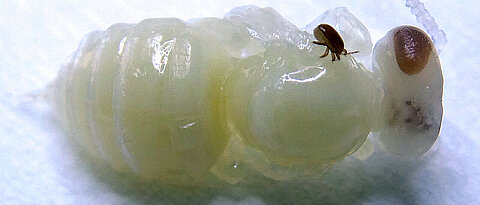
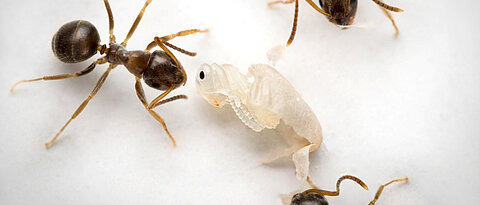
When ant pupae are infected by pathogens, they change their body odour. In this way, they warn the colony of the risk of infection - and thus seal their death.
more
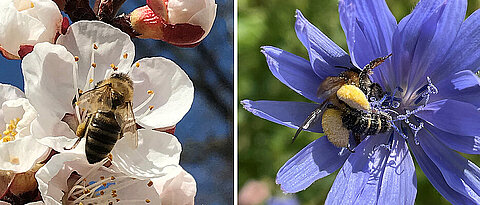
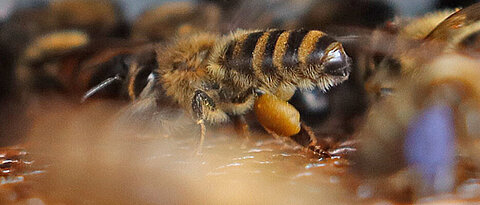
Late summer in Lower Franconia: there are hardly any flowering plants left, and food for honey bees is becoming scarce. Researchers at the Biocenter have investigated how bees cope with this situation.
more
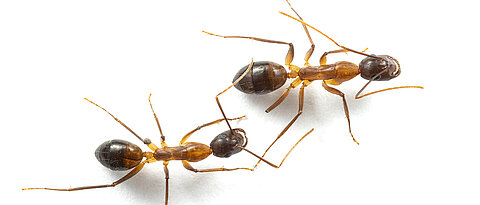
Carpenter ants are not squeamish when it comes to caring for the wounded. To minimise the risk of infection, the insects immediately amputate injured legs – thereby more than doubling their survival rate.
more
Walks around the Würzburg Hubland campus with University Chancellor Uwe Klug, with the "Living Campus" initiative or with students in the campus garden: A total of 20 new short films deal with sustainability at the university.
more
Improving biodiversity and maintaining yields at the same time? For many, this sounds like a contradiction in terms. However, a new study by the University of Würzburg shows that both are possible under the right conditions.
more
For honeybees to overwinter successfully, several factors must work together. Researchers at the University of Würzburg have now identified a crucial one: The more diverse the diet, the greater the chances of survival.
more
Shrub fringes on the edges of forests and fields protect animal species and have a positive effect on biodiversity: This was reported by a research team from the University of Würzburg.
more
In a new study, researchers at the University of Würzburg are investigating the interaction of major global change drivers on insects.
more