


Why some beetles like alcohol
04/09/2018
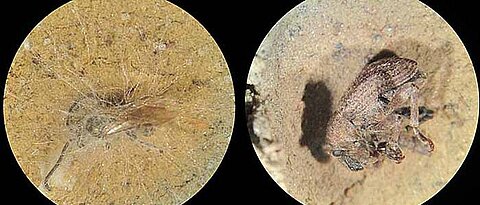
Alcohol used as a "weed killer" optimizes the harvest of ambrosia beetles.
more
Alcohol used as a "weed killer" optimizes the harvest of ambrosia beetles.
more
An increasing proportion of the world's protected forests are subject to extensive logging activities. The practice is called "salvage logging" and allegedly aims to protect e.g. areas of windthrow against bark beetle infestation. However, a Würzburg study has found that this instrument is used far too often.
more
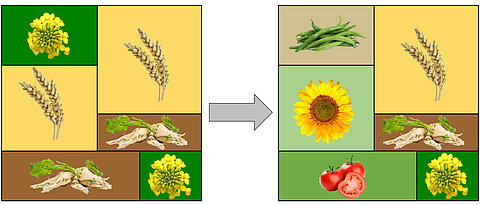
Crop variety in agriculture has a positive impact on the natural enemies of aphids. Farmers can use this insight to keep aphids at bay and cut down on pesticides.
more
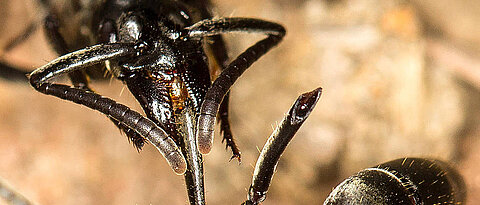
Ants dress the wounds their mates have suffered in battle. Such behaviour is believed to be unique among animals.
more
Astonishing evolution: Because digger wasps switched prey, the chemical protective layer of their skin changed, too.
more
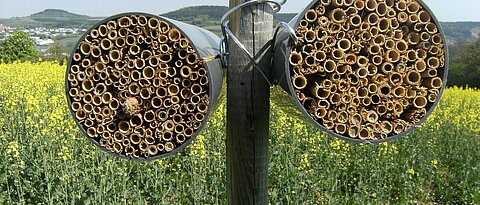
Wild bees are important pollinators of many crop plants – sometimes they are even more efficient than honeybees. Their numbers can be increased sustainably using simple means as a recent study has found.
more
Global warming changes the flowering times of plants and the moment when bees hatch – sometimes with severe consequences for the bees. This was shown by a new study conducted by ecologists from the University of Würzburg.
more
Ants operate a unique rescue system: When an insect is injured during a fight, it calls for help. Its mates will then carry it back to the nest for recovery.
more
Climate change is affecting vegetation also in our latitudes. For the first time, scientists have conducted experiments to determine to what extent wild animals are capable of adjusting to this change.
more
A special camouflage allows parasitic wasps to raid the nests of host species. The affected hosts seem to have responded to that in the course of evolution as Würzburg biologists report.
more