PD Dr. Frank Waller

Research area

Heat stress resistance in plants


Regulation of sphingolipid metabolism


Interaction of plants with pathogens and symbiotic root endophytes

If you are interested in a research internship or Bachelor / Master thesis, please feel free to contact me!

The Team

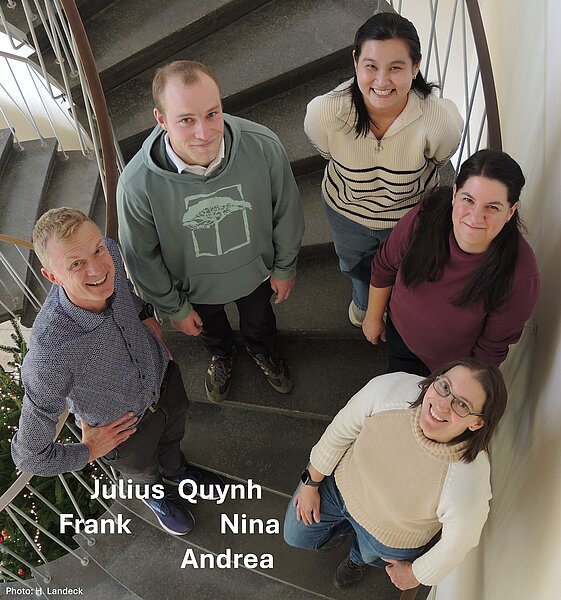
Waller group (please click to see all of us)
Waller group photo (please click to see all of us)

Waller group

Plant adaptation to heat stress –role of lipids in the cellular membrane

Plants must ensure that their cellular processes can function at a wide range of temperatures. In response to heat stress, this includes adaptations in leaf shape and leaf movements that increase transpiration and thus reduce the temperature in the leaves. At the cellular level, several proteins are already known to serve as temperature sensors and which control the transcription of heat stress proteins. However, many other mechanisms are not well understood or have not yet been discovered. We are investigating how the lipid membrane adapts to heat stress. On the one hand, many lipids in the membrane are exchanged during temperature changes to ensure the necessary membrane fluidity. On the other hand, membrane-associated proteins often require a specific lipid composition. We are investigating both aspects in the model plant Arabidopsis thaliana, using mutant lines with an altered sphingolipid composition. Our experiments enable us to better understand the function of sphingolipids in the cell. Ultimately, we are contributing to a better understanding of how plants adapt to high temperatures. This is also important for the breeding of crops more resistant to temperature extremes.

Mechanisms of plant resistance to biotic stress (pathogens)

Serendipita indica (Piriformospora indica) and Serendipita herbamans, fungi of the order Sebacinales, colonize the roots of many plant species. This colonization can increase the pathogen resistance of the host plant, not only in the roots but also in the leaves (systemic pathogen resistance). In addition, colonization can lead to accelerated plant development and increased growth.

We are investigating the molecular mechanisms underlying these processes.

Previous publications:

Weiss M, Waller F, Zuccaro A, Selosse MA (2016) Sebacinales - one thousand and one interactions with land plants. New Phytol 211: 20-40

Pedrotti L, Mueller MJ, Waller F (2013) Piriformospora indica root colonization triggers local and systemic root responses and inhibits secondary colonization of distal roots. PLoS One 8: e69352

Molitor A, Zajic D, Voll LM, Pons KHJ, Samans B, Kogel KH, Waller F (2011) Barley leaf transcriptome and metabolite analysis reveals new aspects of compatibility and Piriformospora indica-mediated systemic induced resistance to powdery mildew. Molecular plant-microbe interactions : MPMI 24: 1427-1439

Deshmukh S, Huckelhoven R, Schafer P, Imani J, Sharma M, Weiss M, Waller F, Kogel KH (2006) The root endophytic fungus Piriformospora indica requires host cell death for proliferation during mutualistic symbiosis with barley. Proceedings of the National Academy of Sciences of the United States of America (PNAS) 103: 18450-18457

Waller F, Achatz B, Baltruschat H, Fodor J, Becker K, Fischer M, Heier T, Huckelhoven R, Neumann C, von Wettstein D, Franken P, Kogel KH (2005) The endophytic fungus Piriformospora indica reprograms barley to salt-stress tolerance, disease resistance, and higher yield. Proceedings of the National Academy of Sciences of the United States of America (PNAS) 102: 13386-13391


Practical training and thesis projects FAQ

Can I do an internship or write my thesis with you?

Yes, we offer internships and thesis projects for bachelor, master, and Erasmus students!


When can I do an internship with you?

We offer internships, bachelor's and master's theses throughout the year. Please contact us in good time, as the number of places is limited, as we value good supervision.


How can I find out about possible internship topics?

The easiest way is to send an email to Frank.Waller (at) uni-wuerzburg.de, but you are also welcome to call us.


What can I learn in your research group?

All internships are research-related projects, often led by doctoral students. Therefore, you will learn scientific working methods, experimental design, experimental work with plants, gene expression analysis using real-time PCR, extraction, identification, and quantification of metabolites using UPLC-MS/MS, plant growth and pathogen tests, data evaluation, and more.


Can I also pursue my own research ideas during an internship?

We are happy to do so if it is in an area that overlaps with our interests and we have the capacity to supervise it. We also welcome your ideas and input on existing projects!

About me

I received my Ph.D. (Biology) at the Albert-Ludwigs-Universität Freiburg i.Br., Germany. Studies abroad included stays in China, Taiwan and Japan.

I worked at the Nara Institute of Science and Technology (NAIST), Nara, Japan as a postdoctoral fellow and worked as a group leader at the Faculty of Agricultural Sciences, Justus-Liebig-Universität Giessen, Germany.

Since 2009 I am leading a small research group at the Chair of Pharmaceutical Biology, Julius-Maximilians-Universität Würzburg.

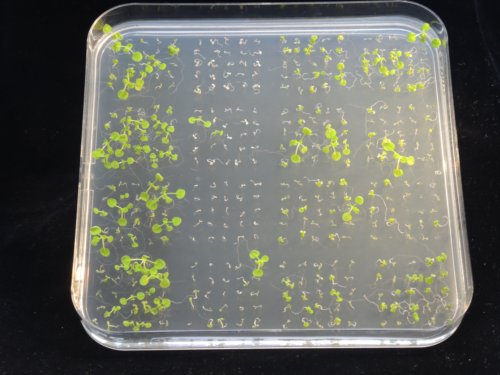
Testing stress resistance of different Arabidopsis mutant lines

Funding by

We are currently supported by a grant of the Deutsche Forschungsgemeinschaft (DFG).

Previous research was supported by: DFG, Alexander von Humboldt Stiftung / Japanese Society for the Promotion of Science (JSPS),  Ostasien-Stipendienprogramm der Daimler Benz AG / Studienstiftung des deutschen Volkes,  Deutscher Akademischer Austauschdienst (DAAD).