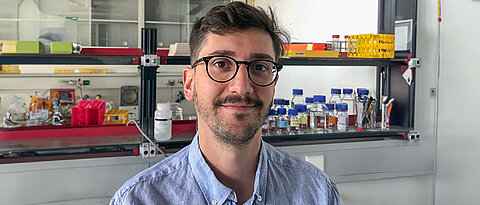
At the University of Würzburg (JMU), Dimitrios Papadopoulos is investigating RNA-based mechanisms maintaining aggressive pediatric tumors. He has now been awarded one of Europe's most coveted fellowships for young scientists.
more




At the University of Würzburg (JMU), Dimitrios Papadopoulos is investigating RNA-based mechanisms maintaining aggressive pediatric tumors. He has now been awarded one of Europe's most coveted fellowships for young scientists.
more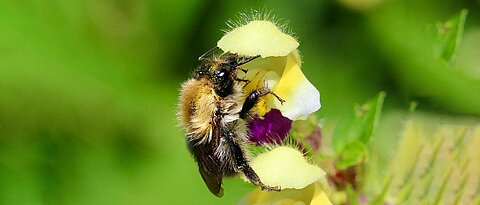
It's not just us humans who suffer from heatwaves. Researchers at the University of Würzburg discovered that hot temperatures rob bumblebees of their sense of smell – and makes them struggle when searching for food.
more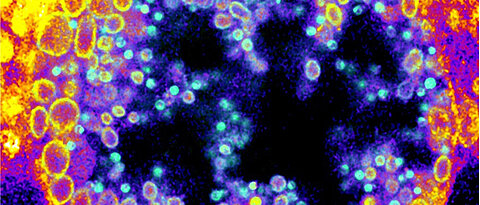
Researchers from Würzburg and Berlin present a new molecule for visualising the sphingomyelin metabolism. This offers prospects for innovative therapeutic approaches in infection research.
more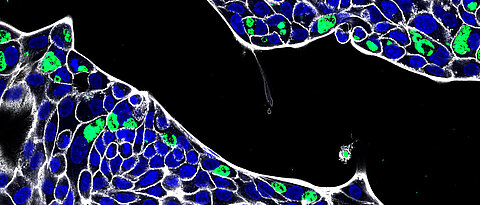
Chlamydiae are sexually transmitted pathogens that can apparently survive in the human gut for a long time. Researchers from Würzburg and Berlin report this in the journal PLOS Pathogens.
more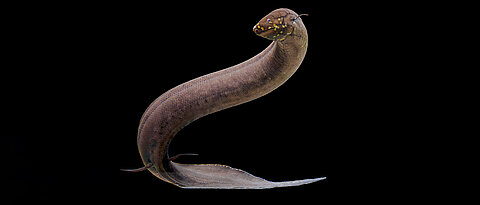
An international research team has sequenced the largest genomes of all animals – those of lungfish. The data will help to find out how the ancestors of land vertebrates managed to conquer the mainland.
more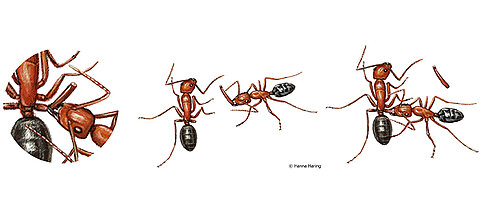
In an emergency, ants bite off injured limbs of fellow ants to ensure their survival. Whether they take this radical step depends on the location of the wound.
more
The University of Würzburg is part of a new Collaborative Research Centre (CRC) in which innovative therapeutic strategies against cancer are being sought. Another CRC with Würzburg participation will be extended.
more
Christian Hof is head of the new Chair of Global Change Ecology at the University of Würzburg. His research focuses on how climate change and human activities affect species and biodiversity.
more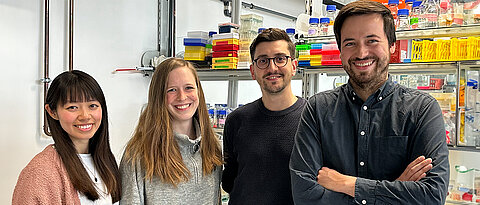
Researchers at the University of Würzburg have discovered a new function of the oncoprotein MYCN: It not only helps cancer cells to grow stronger, but also makes them more resistant to drugs.
more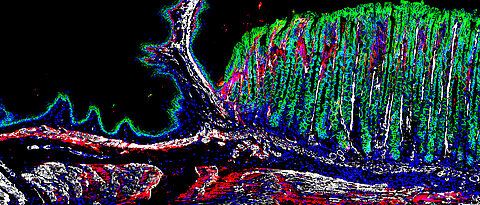
The transition from the esophagus to the stomach is a delicate region from a medical point of view, often associated with pathological disorders leading to cancer. An international research team has now gained new insights into this region. These pave the way for new prevention and treatment options.
more
In their natural environment, wild bees are exposed to various pesticides that can have a potentially toxic effect. A study by the University of Würzburg has now shown that bumblebees are relatively resistant to these products.
more
Cancer is one of the most common causes of death in children worldwide. A research team in which the University of Würzburg is involved wants to change this – and has now received substantial funding for its work.
more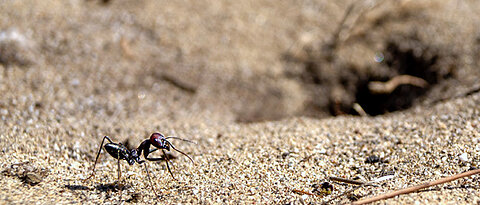
Desert ants find their way during an early learning phase with the help of the Earth's magnetic field. The associated learning process leaves clear traces in their nervous system. This is shown in a new study by a Würzburg research team.
more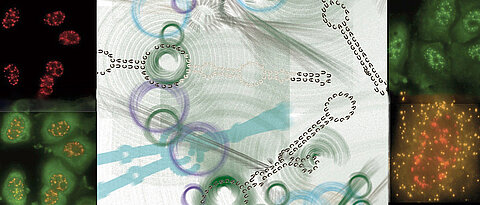
More than 1,000 players are involved in a cell when genetic information is translated into proteins. A new German-Israeli research project is now working on systematically identifying their respective tasks.
more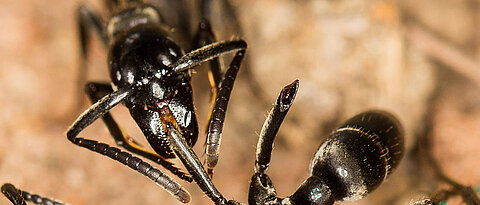
The African Matabele ants are often injured in fights with termites. Their conspecifics recognise when the wounds become infected and initiate antibiotic treatment.
more