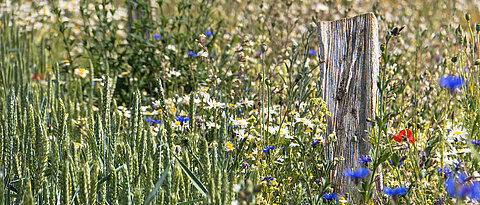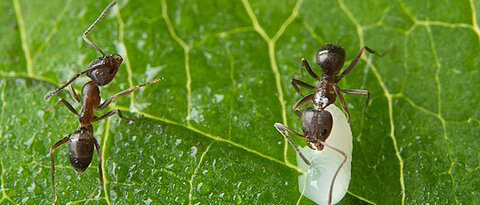




In the cultivation of organic cacao, many factors determine the yield. An international research team has now identified important players and their combined effects.
more
In the cultivation of organic cacao, many factors determine the yield. An international research team has now identified important players and their combined effects.
more
Poxviruses pose a threat to humanity that should be taken seriously, as the current outbreak of monkeypox shows. A research team from the University of Würzburg is now working on the development of new drugs.
more
Researchers from Heidelberg and Würzburg have uncovered the inner workings of the molecular machinery that shapes chromosomes during cell division.
more
Life-like organ replicas - so-called 3D organoids - are a good way to research disease processes. A team from the University of Würzburg has now presented a kind of blueprint for such a model of the cervix.
more
Little is known about the food webs of herbivorous insects. A team from the Würzburg Biocenter is investigating, in Lower Franconia as well as in the Berchtesgaden Alps.
more
Insect diversity is declining in Bavaria. Land use is a major driver, but the impact of climate change is still unknown. A study by the University of Würzburg has now investigated how both factors interact.
more
Dormant herpesviruses induce their reactivation via a previously unknown cellular mechanism mediated by a viral microRNA. Würzburg researchers show this in the journal "Nature".
more
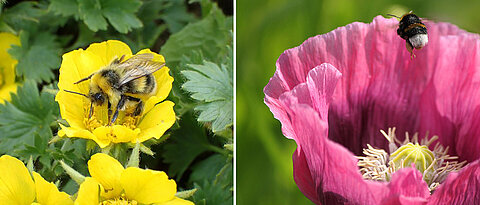
Do pesticides have anything to do with the decline in bee populations? A research team led by the University of Würzburg has investigated - and found a connection between fenbuconazole and the insects' mating behavior.
more
In humans, only nerves and muscle cells are electrically excitable, whereas in plants almost all cells are. This is due to a sophisticated mechanism in an ion channel of the vacuole.
more
Infections with several pathogens simultaneously increase the risk of cervical cancer—these results from a study conducted on artificial 3D tissue models.
more
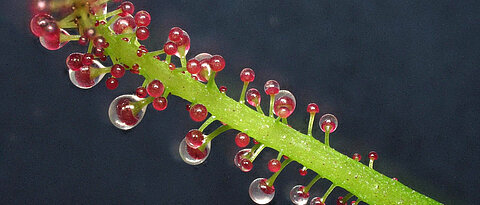
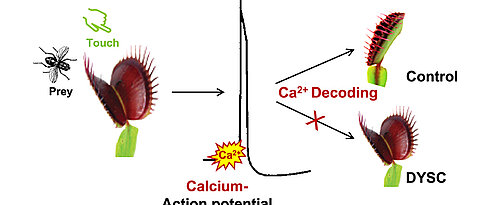
The carnivorous Venus flytrap can be anaesthetised with ether. Some surprising parallels to anaesthesia in humans emerge.
more
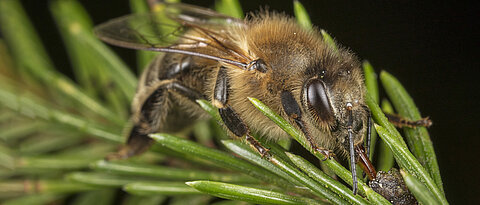
In northern Spain, wild honeybees use hollow electricity poles as nesting cavities. Natural areas in the surroundings promote the colonies’ chances to survive the winter.
more
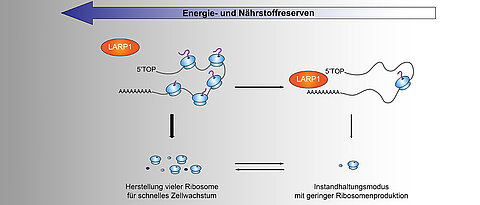
The cells of a certain tumour type, called neuroblastoma, divide very rapidly. This rapid division can have potentially fatal consequences for them. A new study shows how neuroblastoma cells deal with this dilemma.
more
Monarch butterflies employ a sun compass on their long-distance migration. Surprisingly, a new study shows that the compass is only established during flight.
more
The question of the causes of species extinction confronts science with complex tasks. Dr Sarah Redlich from the Biocentre on the challenge of creating a study design.
more