



Honorary Doctorate for Prof. Rappuoli
01/20/2020On Friday 01/31/2020 the Faculty of Biology held a ceremony in honor of Prof. Dr. Rappuoli on the occasion of awarding him the honory doctorate
moreOn Friday 01/31/2020 the Faculty of Biology held a ceremony in honor of Prof. Dr. Rappuoli on the occasion of awarding him the honory doctorate
moreThe Faculty of Biology will pay tribute to the extraordinary scientific achievements of Prof. Rino Rappuoli, Siena, by awarding him the degree of an honorary doctorate.
more
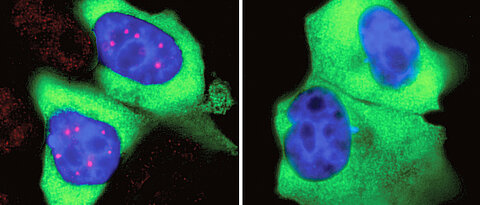
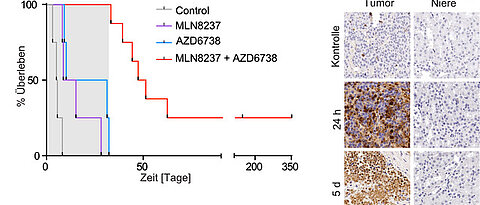
Vaccinia viruses serve as a vaccine against human smallpox and as the basis of new cancer therapies. Two studies now provide fascinating insights into their unusual propagation strategy at the atomic level.
more
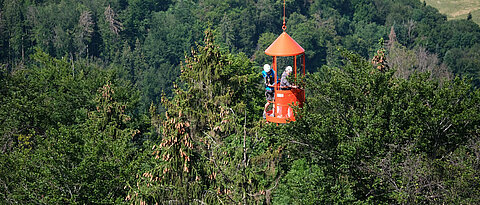
The forests in Europe provide habitat for around 80,000 colonies of wild honeybees. That is why more attention should be paid to preserving the nesting sites for these threatened insects, according to researchers.
more
If ecosystems are disturbed, this can trigger the extinction of species. For her research in this field, the journal Ecography awards biologist Ludmilla Figueiredo with a prize.
more
Their work is most frequently cited in publications of other scientists. Eight researchers from the University of Würzburg have therefore been added to the Highly Cited Researchers 2019 List.
more
Jan Marek Ache heads a new junior research group at the Biocenter. He aims to decode basic mechanisms of flexible behavior control.
more
Circadian clocks coordinate the organism to the alternating cycles of day and night. Scientists from the University of Würzburg have studied how these clocks work in polar regions where days or nights can last for weeks.
more
With freely available radar data from satellites, biodiversity in forests can be analysed very well. In Nature Communications, researchers report that biodiversity even of tiny insects can be reliably modelled from space.
more
Around 20 percent of the world's agricultural areas yields less than it did 20 years ago. According to the Food and Agriculture Organization FAO, humans are the culprit: we have not done enough to protect biodiversity.
more
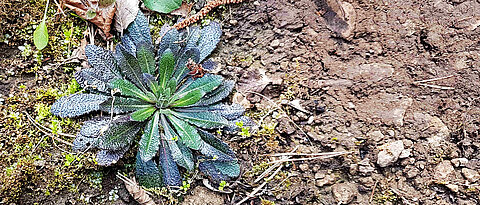
Using special receptors, plants recognize when they are at risk of fungal infection. This new finding could help cultivate resistant crops and reduce pesticide usage.
more
Removing dead trees from the forests and reforesting on a large scale: this is the German Federal Government's strategy against "Forest Dieback 2.0". Ecologists from the University of Würzburg call for other solutions.
more
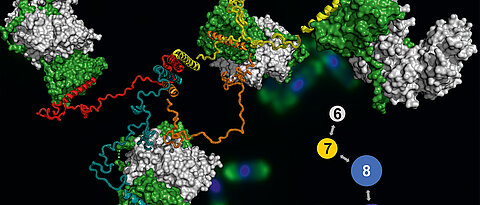
Scientists from the University of Würzburg have discovered that spider silk contains an exceptional protein. It generates high bonding strength by making use of an amino acid scientists have hitherto paid little attention to.
more
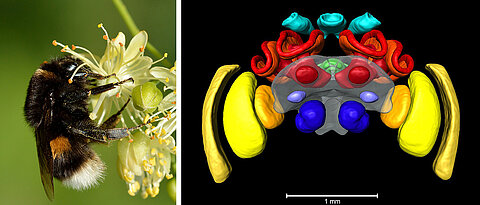
More than 90 percent of all bee species are not organized in colonies, but fight their way through life alone. They are also threatened. Scientists from Würzburg demand more research on the ecology of these insects.
more
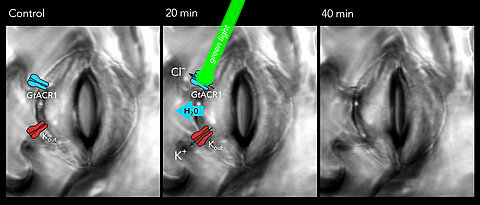
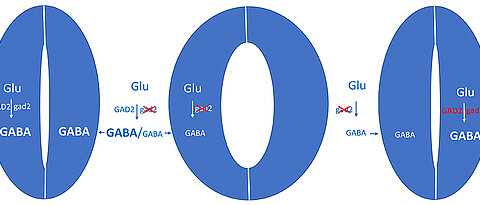
Plants face a dilemma in dry conditions: they have to seal themselves off to prevent losing too much water but this also limits their uptake of carbon dioxide. A sensory network assures that the plant strikes the right balance.
more