


Deutsch
THE BIOCENTER OF THE UNIVERSITY OF WÜRZBURG

Archive

Rare Antelopes and Black Cats

08/08/2019
Three examples of the animal species filmed at Kilimanjaro (from left): an Abbott’s duiker, a blue monkey and a black serval.

Numerous large mammals have been documented with video traps on Mount Kilimanjaro by a research group of Würzburg University. The protected areas of the mountain are of tremendous importance for the biodiversity of this animal group.

more

Poisonous grasses: new study provides reassurance

07/25/2019
Epichloë hypha between plant cells.

Stories of mass poisoning incidents of livestock due to toxic grasses made headlines especially overseas. Animal ecologists from Würzburg have studied whether this hazard is also lurking on German pastures.

more

How climate change disrupts relationships

07/18/2019
Global warming can disrupt the mutualistic interactions of plants and pollinators as in the case of the European orchard bee, the red mason bee and the pasque flower.

Plants rely on bees for pollination; bees need plants to supply nectar and pollen. Scientists from the University of Würzburg have studied how climate change affects these mutualistic interactions.

more

No escape for mosquitoes

07/08/2019
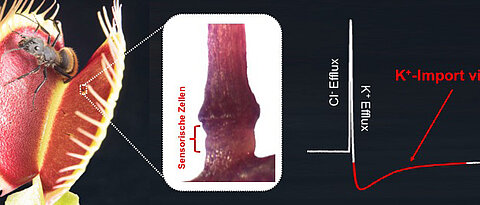
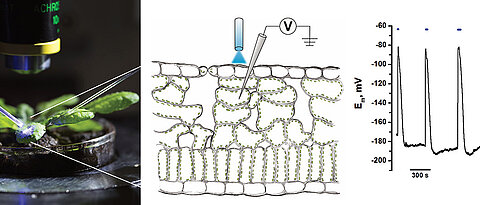
Venus flytrap

Venus flytraps are capable of detecting the movements of even the smallest insects. This mechanism protects the plant against starving from hyperactivity as a new study conducted by scientists from Würzburg and Cambridge reveals.

more

Scientists alarmed by bark beetle boom

07/01/2019
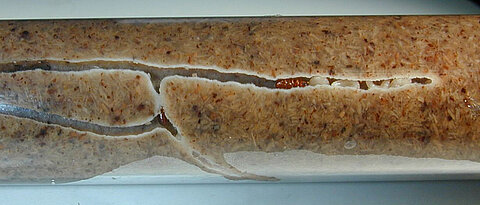
The European spruce bark beetle

Bark beetles are currently responsible for killing an unprecedented number of trees in forests across Europe and North America. Researchers are therefore urging to step up research into bark beetles – also in view of climate change.

more

(Not only) the wind shows the way

06/25/2019
A ball-rolling dung beetle (Photo: Chris Collingridge)

When the South African dung beetle rolls its dung ball through the savannah, it must know the way as precisely as possible. Scientists have now discovered that it does not orient itself solely on the position of the sun.

more

Cell Division at High Speed

06/19/2019
Cells divide after activation of YAP (green staining) – but only if the MMB protein complex is intact. Image: AG Gaubatz

When two proteins work together, this worsens the prognosis for lung cancer patients: their chances of survival are particularly poor in this case.

more

Exciting Plant Vacuoles

06/14/2019
The activity of the TPC1 ion channel in the vacuole membrane (yellow) is essential for the excitability of the vacuole. On the left is a plant cell, in the middle the vacuole with chloroplasts (red) and a 3D reconstruction of the TPC1 crystal structure.

Researchers have filled two knowledge gaps: The vacuoles of plant cells can be excited and the TPC1 ion channel is involved in this process. The function of this channel, which is also found in humans, has been a mystery so far.

more

Systems Biology of Antibiotics

05/22/2019
Dr. Ana Rita Brochado investigates the effect of antibiotics on bacteria.

Bacteria can quickly become resistant to antibiotics. Which mechanisms are responsible for this and how to counteract it? Dr. Ana Rita Brochado, who is setting up a new Emmy Noether Junior Research Group at the University of Würzburg, is investigating this.

more

Plant Researcher Receives 1.5 Million Euros

05/08/2019
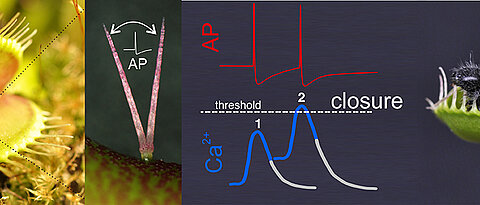
When catching and digesting its prey, the Venus flytrap repeatedly counts the number of electrical signals (AP, action potentials). These processes are being investigated at the University of Würzburg.

How does the Venus flytrap count and calculate? This is what the Würzburg plant researcher Rainer Hedrich wants to find out. For his project, he will receive 1.5 million euros from a renowned funding programme.

more

Wax helps plants to survive in the desert

04/26/2019
The Würzburg biologists Markus Riederer (left) and Amauri Bueno found out why the leaves of the date palm do not dry out even at temperatures above 50 degrees Celsius.

The leaves of date palms can heat up to temperatures around 50 degrees Celsius. They survive thanks to a unique wax mixture that is essential for the existence in the desert.

more

Rumford Prize for Georg Nagel

04/16/2019
Professor Georg Nagel in front of the image of an alga in which a novel photo sensor was labelled with green fluorescent dye.

Controlling cells with light: Professor Georg Nagel has won another award for his contributions to the invention and refinement of optogenetics. He received the prize along with other laureates in the USA.

more

New Pathways for Sustainable Agriculture

04/08/2019
Small-scale agricultural landscapes (left) offer advantages: they promote biological diversity, pollination and natural pest control.

Diversity beats monotony: a colourful patchwork of small, differently used plots can bring advantages to agriculture and nature. This is the result of a new study by the University of Würzburg.

more

Mount Kilimanjaro: Ecosystems in Global Change

03/28/2019
Coffee agriculture in the highlands of Mount Kilimanjaro.

Land use in tropical mountain regions leads to considerable changes of biodiversity and ecological functions. The intensity of such changes is greatly affected by the climate.

more

Protein BRCA1 as a Stress Coach

03/20/2019
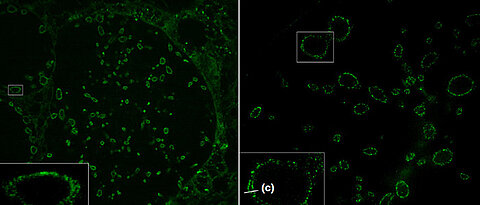
Cells of a neuroblastoma: The red dots mark sites where the BRCA1 protein occurs in close contact with the RNA polymerase II. This is only the case if the protein MYCN is also present (right).

Two proteins work hand in hand to ensure that the tumour cells of neuroblastoma can grow at full speed. In "Nature", a Würzburg research team shows how the proteins can do this.

more