

Villages can provide important habitats for insects. A new study by the University of Würzburg shows which areas in rural settlements are particularly rich in species – and where there is still room for improvement.
more




Villages can provide important habitats for insects. A new study by the University of Würzburg shows which areas in rural settlements are particularly rich in species – and where there is still room for improvement.
more
Up to half of the insects in the Amazon region could be exposed to life-threatening heat levels due to progressive, anthropogenic global warming. This is shown by a recent study by the universities of Würzburg and Bremen.
more
To improve their chances of survival, animals must learn – and that can be dangerous. A new study from the University of Würzburg shows how gradual learning under parental supervision can reduce these risks.
more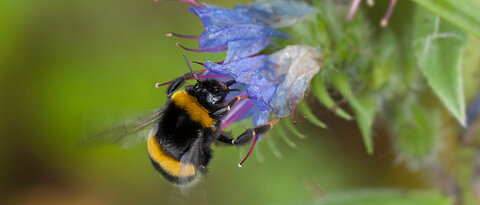
When searching for food, most insects specifically head for flowers that promise them the best yield. Researchers from the Universities of Konstanz and Würzburg have now shown how bumblebees orientate themselves.
more
Whether people follow a general trend when choosing a partner or consciously decide against it has a noticeable impact on the diversity of phenotypes to choose from. This is shown by a new study by the University of Würzburg.
more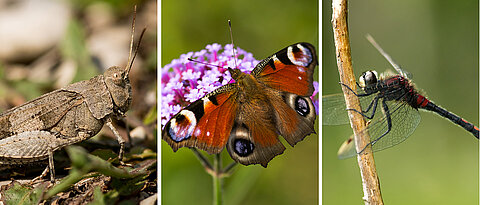
How is biodiversity among Bavaria's insects changing - and why? Researchers at the University of Würzburg are now using the Karla.Natur database of the Bavarian State Office for the Environment to model future trends.
more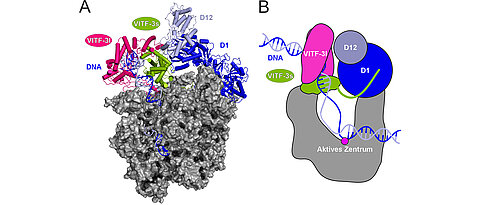
A research team at the University of Würzburg has deciphered another aspect of poxviral gene activation. The study reveals a unique viral mechanism: a molecular ring anchors the viral copying machine to the DNA.
more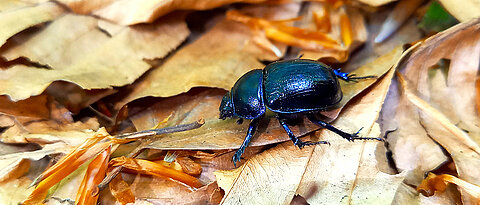
Researchers at the University of Würzburg have shown that dung beetles suffer in canopy openings that have been deliberately created to promote biodiversity. Rising temperatures are significantly exacerbating the problem.
more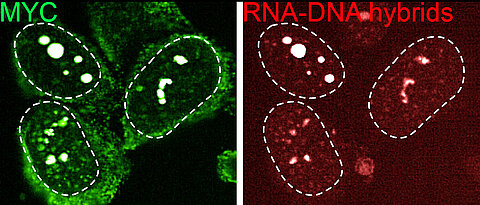
The cancer gene MYC camouflages tumours by suppressing alarm signals that normally activate the immune system. This finding from a new study offers a promising way to improve existing cancer therapies as well as develop new ones.
more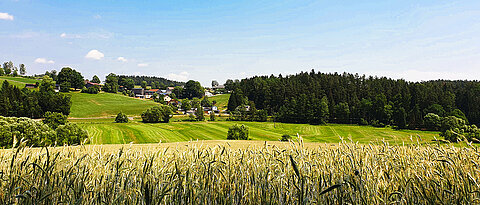
According to a new study by the University of Würzburg, Bavarian meadows are the most monotonous insect habitats. Surprisingly, fields and settlements often offer more diversity than grassland.
more
Climate change and biodiversity loss are among the most pressing challenges of our time. With Trees4Adapt, the European Union has launched a project to address these challenges – with the University of Würzburg as a partner.
more
A functional sperm tail is essential for successful reproduction. Defects in its development often lead to infertility. This is also shown by a recent international study involving researchers from Würzburg.
more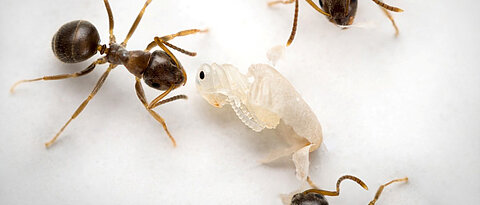
When ant pupae are infected by pathogens, they change their body odour. In this way, they warn the colony of the risk of infection - and thus seal their death.
more
Glossy flowers are visible to bees from a distance, but make color recognition difficult up close. They thus represent a visual compromise of nature, as a new study by the University of Würzburg shows.
more
Even in sunny forest gaps, browsing by roe deer prevents the natural regeneration of many tree species. Researchers at the University of Würzburg show just how strongly these ungulates shape forest development.
more