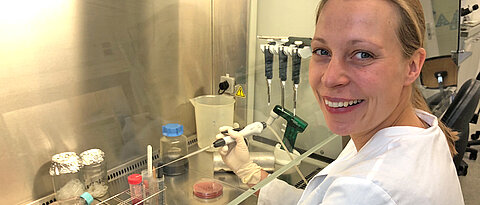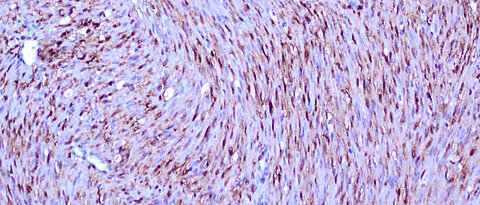






Biologist Svenja Meierjohann has been awarded this year's Zonta Prize for her outstanding work in the field of cancer research.
more
Biologist Svenja Meierjohann has been awarded this year's Zonta Prize for her outstanding work in the field of cancer research.
more
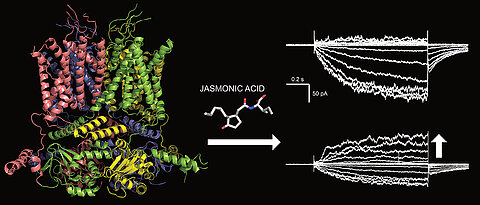
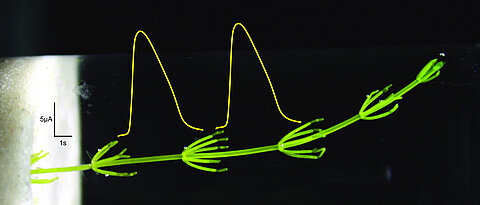
The hormone auxin is a key regulator of plant growth and development. But how it sets these processes in motion has been unclear. Scientists from the University of Würzburg have now uncovered central details.
more
Crop variety in agriculture has a positive impact on the natural enemies of aphids. Farmers can use this insight to keep aphids at bay and cut down on pesticides.
more
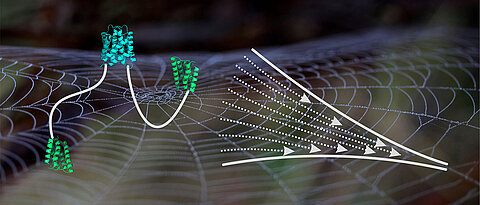
Bioinformatics specialists from the University of Würzburg have studied a specific class of hormones which is relevant for plants, bacteria and indirectly for humans, too. Their results challenge previous scientific assumptions.
more
Ants dress the wounds their mates have suffered in battle. Such behaviour is believed to be unique among animals.
more
They reproduce through gynogenesis. Their offspring are clones of the mother. According to established theories, the Amazon molly should have become extinct a long time ago. A new study shows how the fish avoids this fate.
more
Astonishing evolution: Because digger wasps switched prey, the chemical protective layer of their skin changed, too.
more
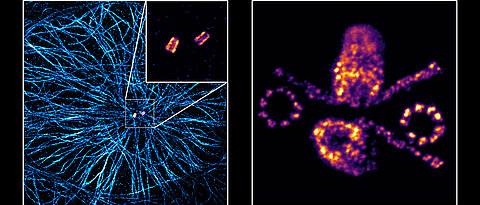
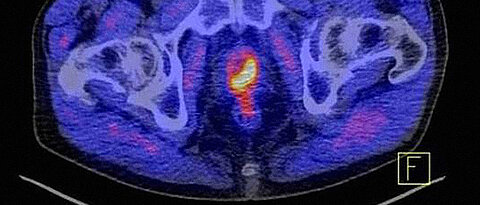
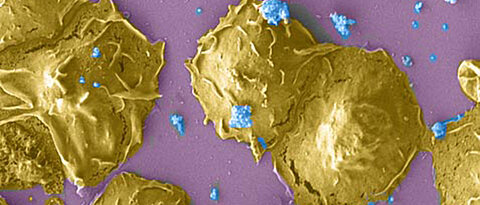
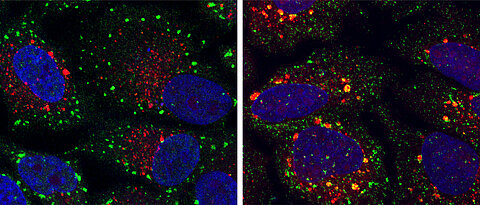
Myc proteins play an important role when cells become cancerous. Researchers from the University of Würzburg have studied just how they do this. They might thus open up ways to develop new therapies.
more
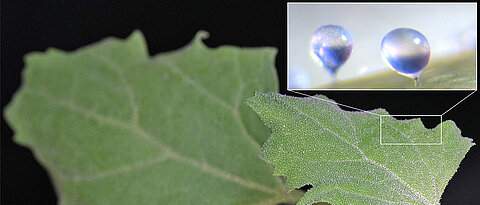
The quinoa plant might serve as a model for making other crops salt-tolerant. It grows well on saline soils because the excess salt is simply dumped into special bladders on its leaves.
more
A great success for the University of Würzburg in the first round of the Excellence Strategy: expert committee approves three draft proposals for Excellence Clusters in the fields of physics, chemistry and medicine.
more
One specific gene is overexpressed in many human tumours. This particular gene is the centre of Elmar Wolf’s research activities. The European Research Council (ERC) has awarded him a "Starting Grant" worth €1.5 million for this purpose.
more
The prestigious Shanghai Ranking has placed the University of Würzburg among the world’s top 200 universities – as one of four Bavarian and 15 German universities.
more
Such detailed images of the pathogen that causes sleeping sickness inside a host are unique so far: They illustrate the manifold ways in which the parasites move inside a tsetse fly.
more
Fanconi anemia is a rare genetic disease characterized by high cancer risk. Researchers of the University of Würzburg now have revealed a new Fanconi anemia gene that is involved in complex DNA repair processes and may also play a relevant role in cancer prevention.
more
The blood-brain barrier is a unique mechanism to shield the brain. Scientists from the University of Würzburg have now uncovered details of how it evolves. This finding offers new chances for modification and regulation.
more