
AG Beneke
Interested in a PostDoc, PhD or Student Project?
Get in touch: tom.beneke@uni-wuerzburg.de
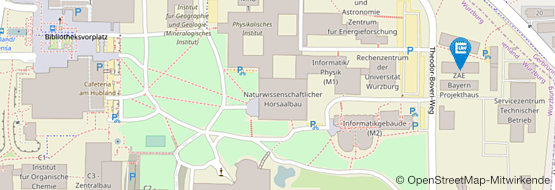
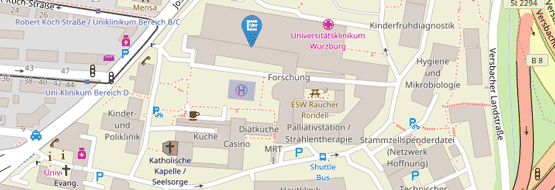
Address: Tom Beneke
University of Wuerzburg
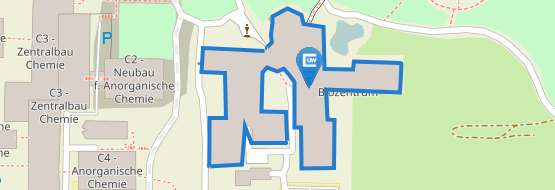
Biocenter, Cell and Developmental Biology, Zoology I
Am Hubland, 97074 Würzburg, Germany
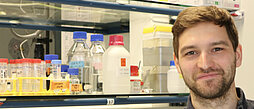
Tom Beneke
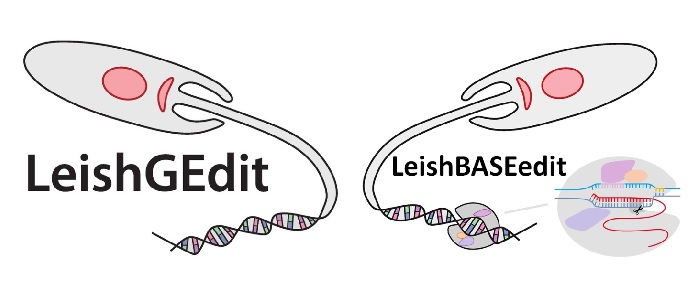
... is a molecular biologist with research experience in academia and industry. He completed his PhD at the University of Oxford where he developed novel CRISPR screening and gene editing approaches (LeishGEdit) to study the requirement of parasite motility throughout the Leishmania life cycle. This was followed by a PostDoc at the University of Oxford and a research position in the biotech industry. At OXGENE he employed large-scale CRISPR screens for target discovery projects. Tom was then awarded an EMBO and Marie Curie Fellowship to continue his research on Leishmania at the University of Würzburg and then started in 2024 his own independent Junior Research Group at the Biocenter.
Sept 2026: Award of ERC Starting Grant
Sept 2025: Award of DFG Emmy Noether Junior Group Leader Funding
Since 2024: Independent Junior Group Leader, Cell and Developmental Biology, Biocenter, University of Würzburg
2023 – 2025: Independent Marie-Sklodowska-Curie Postdoctoral Fellowship (hosted by Markus Engstler), Cell and Developmental Biology, Biocenter, University of Würzburg
2022 – 2023: Independent EMBO Postdoctoral Fellowship (hosted by Markus Engstler), Cell and Developmental Biology, Biocenter, University of Würzburg
2020 – 2022: CRISPR Screening Scientist/Senior Scientist, Oxford Genetics (OXGENE)
2019 – 2020: PostDoc in William James’ lab, Sir William Dunn School of Pathology, University of Oxford
2015 – 2019: PhD Student in Eva Gluenz’ lab, Sir William Dunn School of Pathology, University of Oxford









Research synopsis
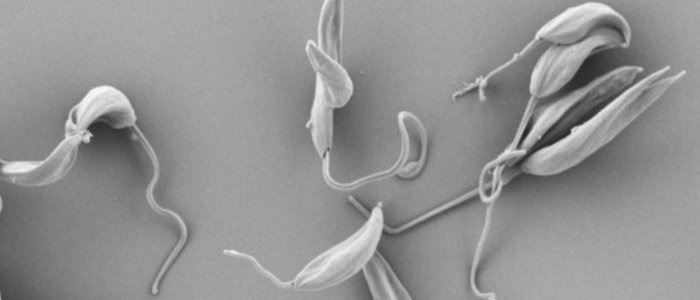
The Beneke lab studies the protozoan parasite Leishmania, the causative agent of the neglected tropical disease leishmaniasis. Leishmania parasites are transmitted by sand flies and can cause a wide spectrum of disease, ranging from localised skin lesions to disseminating mucocutaneous disease and potentially fatal visceral infections. Why some parasite species remain locally restricted while others spread through tissues and internal organs remains a central question in infection biology.
But the Beneke lab does not just study Leishmania to understand how these parasites cause disease. The lab also uses them as an alternative eukaryotic model system to uncover broader principles of cellular adaptation and to study how cells respond to changing environments, how pathogens interact with the host cells they infect, and how these interactions shape disease outcome. The research combines molecular parasitology, cell biology and functional genomics with macrophage infection models, live-cell imaging, CRISPR-based screening, omics approaches and in vivo infection models. Current projects focus on parasite dissemination, drug sensitivity and resistance, persistence, genome plasticity and post-transcriptional gene regulation.
To address these questions, the lab develops and applies genetic tools such as LeishBASEedit, a CRISPR base-editing platform for genome-wide loss-of-function screening in Leishmania. These approaches allow to systematically dissect parasite biology and uncover mechanisms with relevance for both fundamental eukaryotic cell biology and the treatment of leishmaniasis.
The lab actively supports applications from PostDocs under national and international fellowship schemes, including Humboldt, DAAD, DFG, EMBO and Marie Skłodowska-Curie Actions. If you are interested in joining the lab, please contact Tom by sending a short outline of your project idea together with your CV to tom.beneke@uni-wuerzburg.de.
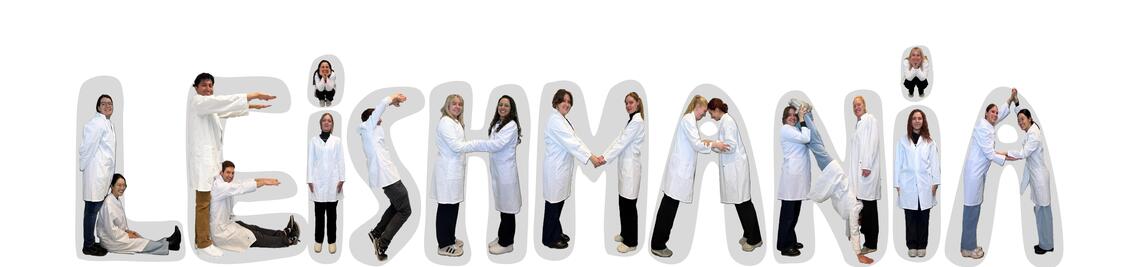
Current members of the Beneke lab are:
Tom Beneke (PI, tom.beneke@uni-wuerzburg.de)
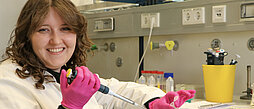
Nicole Herrmann May (PhD Student, nicole.herrmann_may@uni-wuerzburg.de)
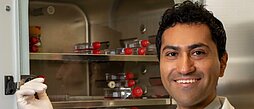
Jorge Adrián Arias del Angel (PostDoc, jorge.arias-del-angel@uni-wuerzburg.de)

Beatriz Cristina Dias De Oliveira (CAPES-Humboldt Research Fellowship Postdoc, beatriz-cristina.dias-de-oliveira@uni-wuerzburg.de)
Sofie Fähr (PhD Student, sofie.faehr@uni-wuerzburg.de)
Magdalena Priester (Master Student)
Ngoc Anh Cao (Master Student)
Annika Schmid (Master Student)
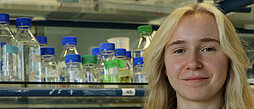
Nurzülal Erden (Master Student)
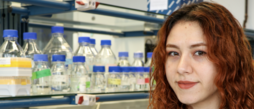
Simon Schwind (Master Student)
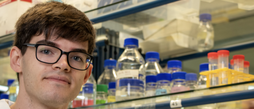
Franziska Blüml (Master Student)
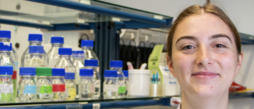
Kristin Machleid (Master Student)
Alumni....

PostDocs:
- Fabian Link (DRUID funded)
- Tamara Sternlieb (Visiting PostDoc from Eva Gluenz lab)
Research Assistants:
- Konstantin Wawra
Master Projects:
- Nicole Herrmann May
- Tulip Al-Hadawi
- Noah Wetterich
- Timothy Wuppermann
- Sarah Kießling
- Kristin Machleid
- Simon Schwind
- Ilkem Ekici
- Laura Finke
- Daana Morozova
Bachelor Projects:
- Judith Neye
- Hanna Sophie Wächter
- Annika Schmid
- Kristin Machleid
- Simon Schwind
- Simon Zorn
- Paul Schild
- Mara Metz
- Hannah Hefter
- Lena Thomas
Publications
Full publication list available on Google Scholar
Pre-print Publications
1. Fochler S., Doran M. H., Beneke T., Smith J., Fort C., Walker B. J., Brown A., Gluenz E., Wheeler R. J. (2025). Axonemal dynein contributions to flagellar beat types and waveforms. BioRxiv. (Link)
2. Arias-del-Angel J., Link F., Herrmann May N., Ekici I., Wawra K., Schwind S., Zorn S., Haggarty J., Weidt S. K., Ritchie R., Barrett M. P., van Zandbergen G., Beneke T. (2026). A genome-wide CRISPR base-editing resource for functional genomics and drug-response mapping in Leishmania mexicana. BioRxiv. (Link)
Peer-reviewed Publications
3. Rajan K. S. ,Aryal S., Murugeshan S., Zhu Y., Bashan A., Olami M., Madmoni H., Nobe Y., Doniger T., Cohen-Chalamish S., Prina E., Pescher P., Beneke T., Taoka M., Holley C., Unger R., Späth G. F., Yonath A., Michaeli S. (2026). Dual functionality of a small nucleolar RNA dictates the structure and function of translating ribosomes. Nature Communications. (Link)
4. de Oliveira B. C. D., Arias-del-Angel J., Herrmann May N., Barrett M. P., Domagalska M. A., Beneke T. (2026). Beyond Resistance: Emerging Methods to Unravel Drug Responses in Leishmania. PLoS Pathogens. (Link)
5. Beneke T., Neish R., Catta-Preta C. M. C, Smith J., Valli J., McCoy C. J., Albuquerque-Wendt A., Mottram J. C., Gluenz E. (2025). Leishmania mexicana pathogenicity requires flagellar assembly but not motility. Virulence. (Link)
6. Doran M. J., Niu Q., Zeng J., Beneke T., Smith J., Ren P., Fochler S., Coscia A., Höög J. L., Meleppattu S., Lishko P. V., Wheeler R. J., Gluenz E., Zhang R., and Brown A. (2025). Evolutionary adaptations of doublet microtubules in trypanosomatid parasites. Science. (Link)
7. Albuquerque-Wendt A., McCoy C. J., Neish R., Dobramysl U., Alagoez C., Beneke T., Cowley S. A., Crouch K., Wheeler R. J., Mottram J. C., Gluenz E. (2025). TransLeish: Identification of membrane transporters essential for survival of intracellular Leishmania parasites in a systematic gene deletion screen. Nature Communications. (Link)
8. Thiam R., Santana Ceballos M., Beneke T., Kuk N., Pasquier G., Crobu L., Jeffares D., Vergnes B., Barckmann B. and Sterkers Y. (2025). A novel Leishmania infantum reference strain for gene editing and the study of visceral leishmaniasis. PLoS One. (Link)
9. Herrmann May N., Cao A., Schmid A., Link F., Arias-del-Angel J., Meiser E. and Beneke T. (2024). Improved base editing and functional screening in Leishmania via co-expression of the AsCas12a ultra variant, a T7 RNA Polymerase, and a cytosine base editor. eLife. (Link)
10. Engstler M. and Beneke T. (2023). Gene editing and scalable functional genomic screening in Leishmania species using the CRISPR/Cas9 cytosine base editor toolbox LeishBASEedit. eLife. (Link)
11. McCoy C. J., Paupelin-Vaucelle H., Gorilak P., Beneke T., Varga V. and Gluenz E. (2023). ULK4 and Fused/STK36 interact to mediate assembly of a motile flagellum. Mol Biol Cell. (Link)
12. Beneke T., Dobramysl U., Catta-Preta C. M. C., Mottram C. J., Gluenz E., Wheeler R. (2022). Genome sequence of Leishmania mexicana MNYC/BZ/62/M379 expressing Cas9 and T7 RNA polymerase. Wellcome Open Research. (Link)
13. Sharma R., Avendaño Rangel F., Reis-Cunha J. L., Marques L. P., Figueira C. P., Borba P. B., Viana S. M., Beneke T., Bartholomeu D. C. and de Oliveira C. I. (2022). Targeted Deletion of Centrin in Leishmania braziliensis Using CRISPR-Cas9-Based Editing. Frontiers in Cellular and Infection Microbiology. (Link)
14. Espada C. R., Quilles J. C., Albuquerque-Wendt A., Cruz M. C., Beneke T., Lorenzon L. B., Gluenz E., Cruz A. K. and Uliana S. R. B. (2021). Effective Genome Editing in Leishmania (Viannia) braziliensis Stably Expressing Cas9 and T7 RNA Polymerase. Frontiers in Cellular and Infection Microbiology. (Link)
15. Andersson M., [...], Beneke T. et al. (2020). SARS-CoV-2 RNA detected in blood samples from patients with COVID-19 is not associated with infectious virus. Wellcome Open Research. (authors in alphabetically order). (Link)
16. Wang Z.*, Beneke T.*, Gluenz E. and Wheeler R. J. (2020). The single flagellum of Leishmania has a fixed polarisation of its asymmetric beat. Journal of Cell Science. (Link)
17. Beneke T., Banecki K., Fochler S. and Gluenz E. (2020). LAX28 is required for assembly of the inner dynein arm l1 and tether/tether head complex in the Leishmania flagellum. Journal of Cell Science. (Link)
18. Beneke T. and Gluenz E. (2020). Bar-seq strategies for the LeishGEdit toolbox. Molecular and Biochemical Parasitology. (Link)
19. Beneke T., Demay F., Hookway E., Ashman N., Jeffery H., Smith J., Valli J., Becvar T., Myskova J., Lestinova T., Shafiq S., Sadlova J., Volf P., Wheeler R. J., and Gluenz E. (2019). Genetic dissection of a Leishmania flagellar proteome demonstrates requirement for directional motility in sand fly infections. PLoS Pathogens. (Link)
20. Schädeli D., Serricchio M., Ben Hamidane H., Loffreda A., Hemphill A., Beneke T., Gluenz E., Graumann J. and Bütikofer P. (2019). Cardiolipin depletion-induced changes in the Trypanosoma brucei proteome. FASEB J. (Link)
21. Costa F. C., Francisco A. F., Jayawardhana S., Calderano S. G., Lewis M. D., Olmo F., Beneke T., Gluenz E., Sunter J., Dean S., Kelly J. M. and Taylor M. (2018). Expanding the toolbox for Trypanosoma cruzi: A parasite line incorporating a bioluminescence-fluorescence dual reporter and streamlined CRISPR/Cas9 functionality for rapid in vivo localisation and phenotyping. PLoS Neg Trop Dis. (Link)
22. Martel D., Beneke T., Gluenz E., Spaeth G. and Rachidi N. (2017). Characterisation of Casein kinase 1.1 in Leishmania donovani using the CRISPR Cas 9 toolkit. BioMed Res International. (Link)
23. Beneke T.*, Madden R.*, Makin L., Valli J., Sunter J. and Gluenz E. (2017). A CRISPR Cas9 high-throughput genome editing toolkit for kinetoplastids. R Soc Open Sci. (Link)
Book chapters
24. Beneke T., Demay F., Wheeler R. J. and Gluenz E. (2020). Isolation of Leishmania promastigote flagella. Methods in Molecular Biology Trypanosomatids. (Link)
25. Beneke T. and Gluenz E. (2019). LeishGEdit: a method for rapid gene knockout and tagging using CRISPR/Cas9. Methods in Molecular Biology Trypanosomatids. (Link)
News Articles and Press Releases
Zweimal 1,5 Millionen Euro für Würzburger Forscher: Mediziner und Molekularbiologe erhalten ERC Grants. 03.09.2026 (Link)
ERC Starting Grant for Tom Beneke. 03.09.2026 (Link)
2,2 Millionen Euro für Leishmanien-Forschung in Würzburg. 03.09.2026 (Link)
When tropical parasites use immune cells as a taxi. 30.07.2026 (Link)
Four new doctoral networks are being launched. 14.07.2026 (Link)